Security Film
Glass that breaks but does not come out of the frame.
Read more Security Film

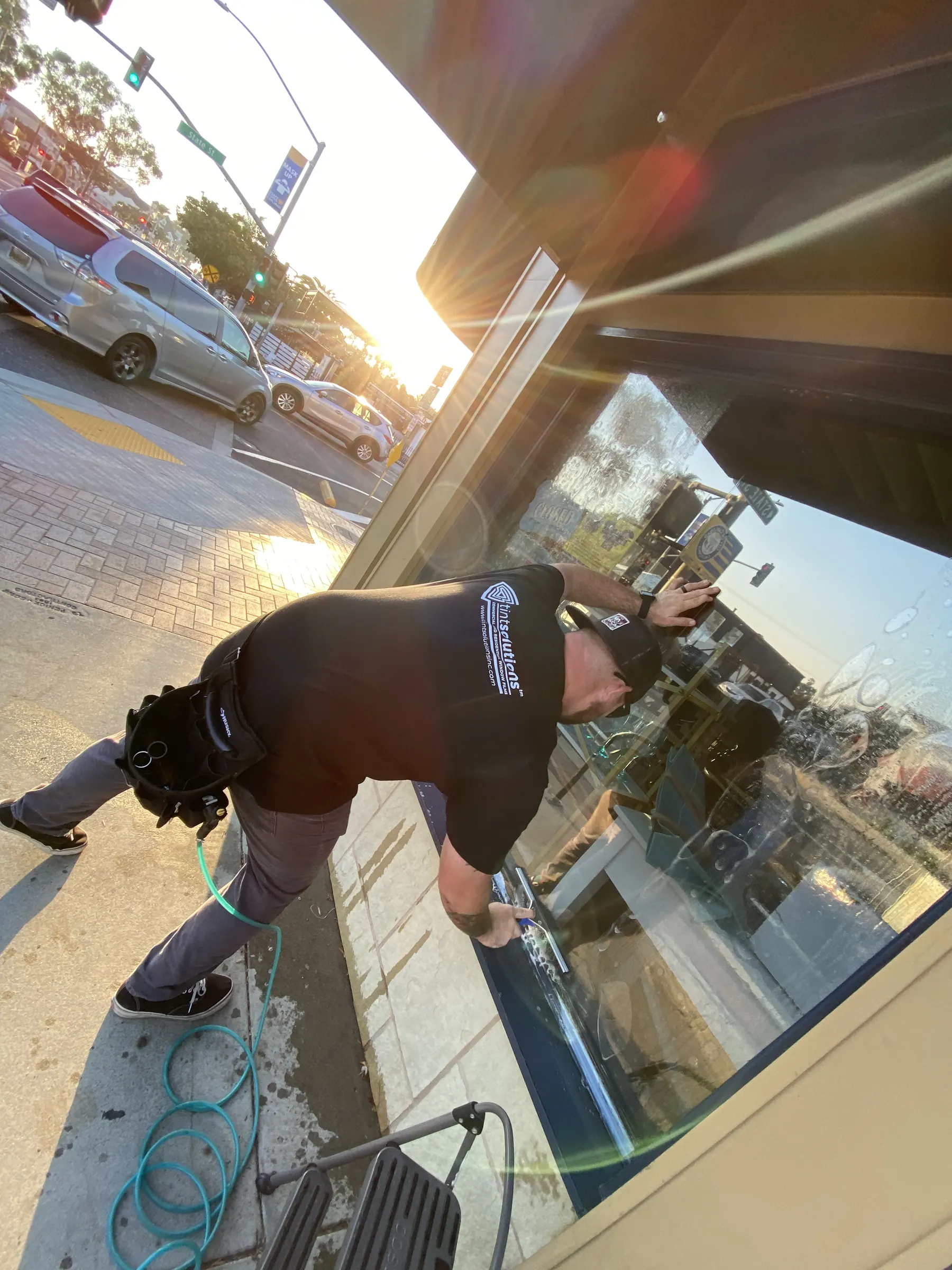
When it gets tagged, you peel off a film instead of buying a window.
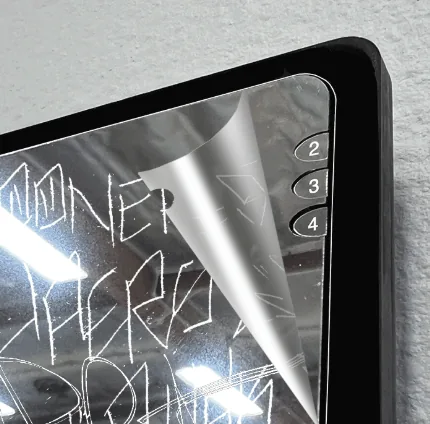
Anti-graffiti film is a clear sacrificial layer applied over glass, mirror, metal and stone. When the surface is tagged, scratched or acid-etched, the damage is in the film, not in the surface. Peel the film off, put a new one on, and the storefront is back to normal the same day, without a glazier, a lead time on a custom pane, or the cost.
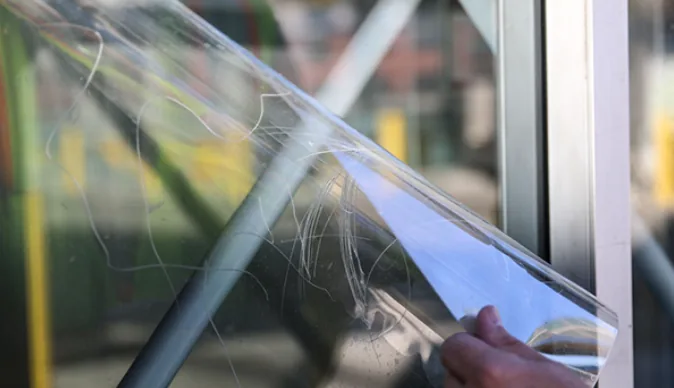
The film is a clear polyester sheet, usually 4 or 6 mil thick, applied over the surface that gets targeted. Its adhesive is made to hold firm against someone picking at the edge, yet release cleanly when we take it off. Paint, marker, scratches and etching cream all stop at the film. Removing a damaged sheet takes minutes and leaves no residue, and a new one goes straight back on.
A single layer is the right answer for most storefronts: when it is damaged, we replace it. Glass that is hit again and again, such as bus windows, transit partitions and restroom mirrors, is better served by multi-layer film. The most common build is four 4-mil layers stacked at the factory. When the top layer is tagged, someone peels it off and a clean layer is already there, with no install visit needed until the stack runs out. Stacks can also be built with fewer layers or thicker film to suit the site and the budget.
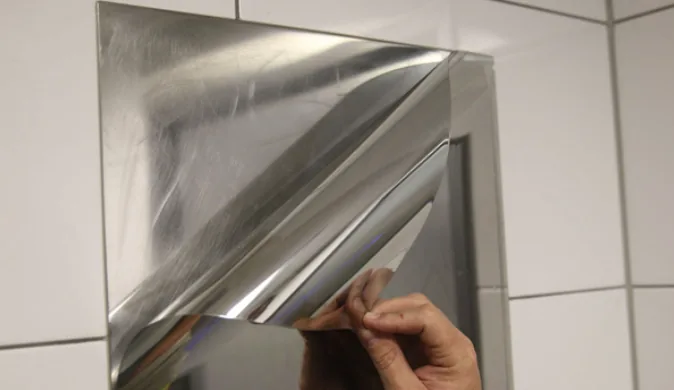
Glass, plastic, mirror and metal each need their own version. We install the Graffiti Shield range: Glass Shield for glass and acrylic, Glass Shield Poly for polycarbonate, NH70 tinted film where you also want heat rejection, Mirror Shield for mirrors, Metal Shield in stainless, brushed aluminum and brushed gold, and Custom Shield for surfaces like powder coat and metal cladding. See the full range.
For properties with many identical openings, such as a fleet of buses, a row of elevator doors or a set of restroom mirrors, pieces can be precut to the exact shape with a small part number in the corner. When one gets hit, the replacement is ordered by that number and fits the first time.
A replacement storefront pane is a glazier, a lead time, a boarded-up window in the meantime and a four-figure invoice. Refinishing etched stainless or replacing a vandalized mirror is not much better. A replacement film is a scheduled visit and a fraction of the cost. For any property that has been hit more than once, the arithmetic is not close. How the math works.
How it looks in practice
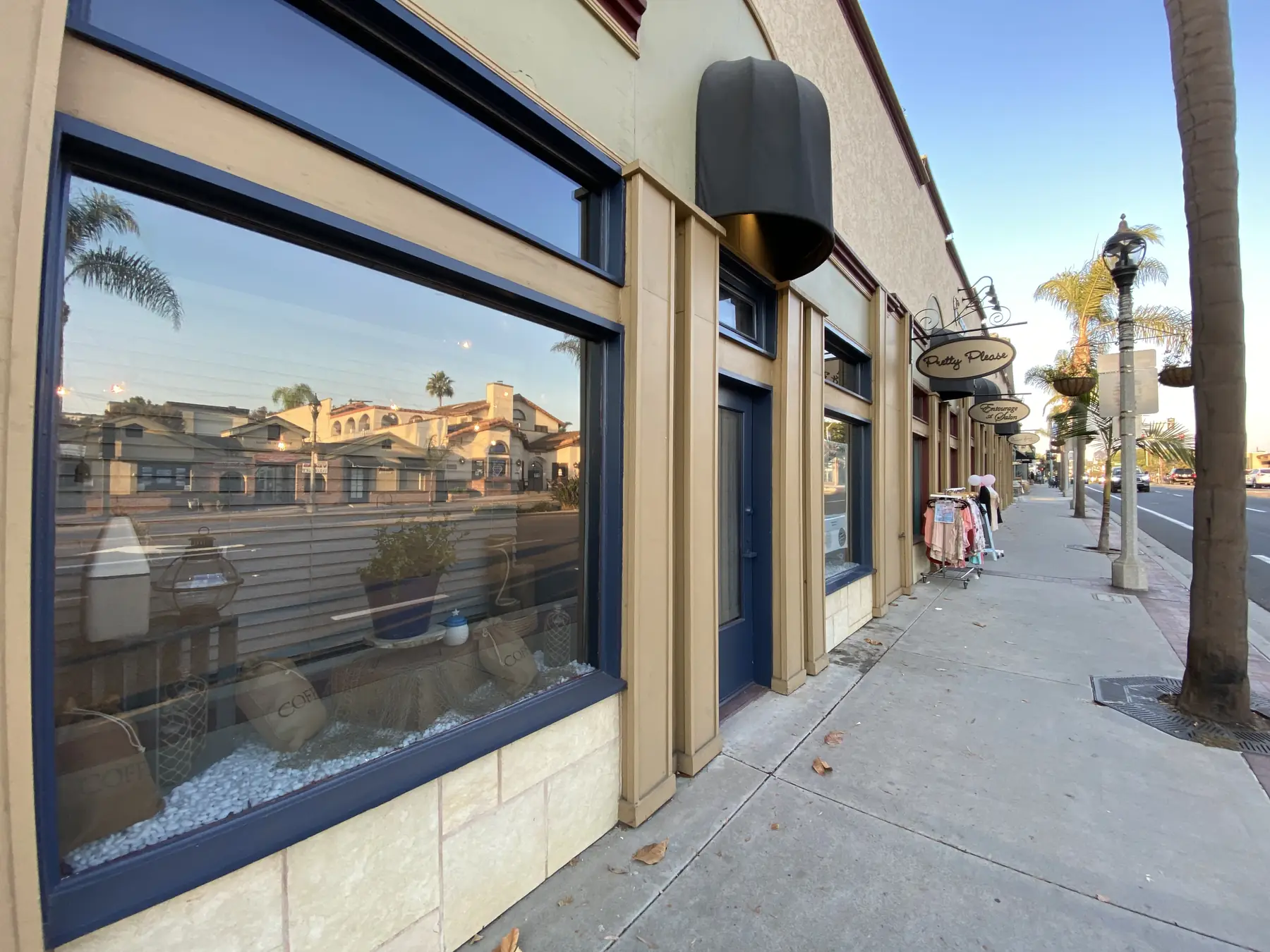
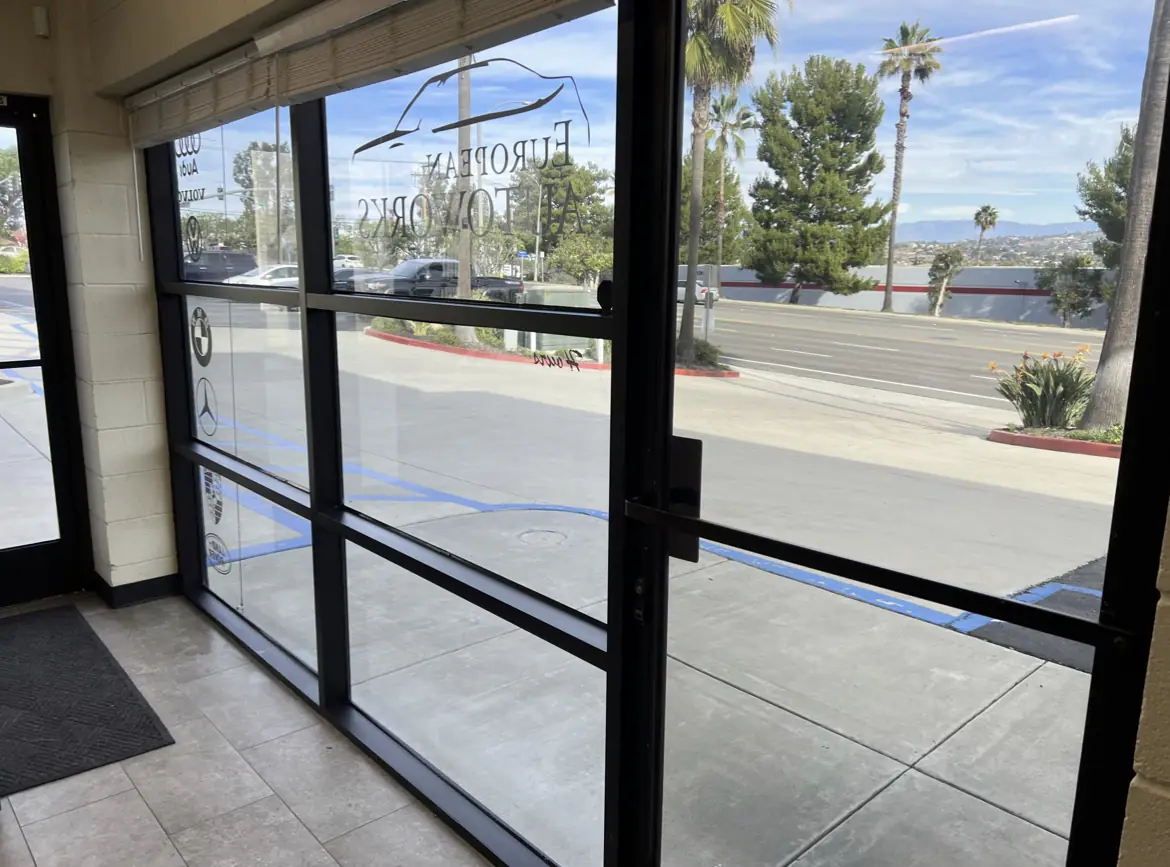
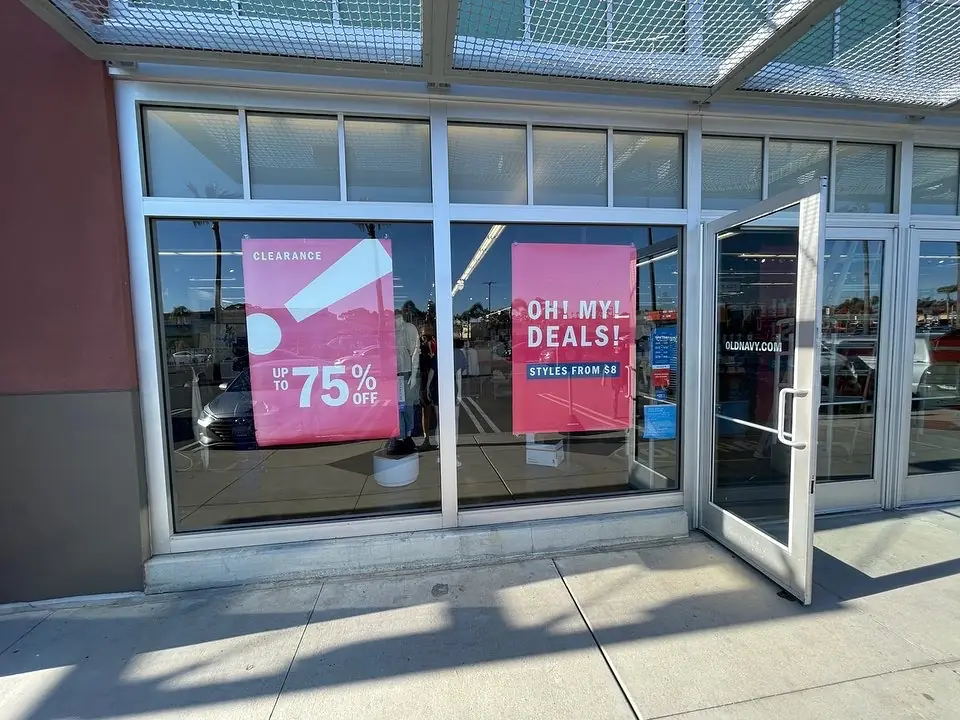
Scratches, etching and tags come off with the layer. The first three photos are Graffiti Shield product images showing the films we install.
Questions
Marker, spray paint, scratching, keying, carving and acid etching. All of it lands in the film instead of the glass, mirror or metal underneath. Once the film is replaced, the surface looks new again.
Yes, as a factory-made multi-layer film. The most common stack is four 4-mil layers, built so each layer peels away cleanly on its own. Stacking separate single sheets on site is a different thing and we do not recommend it, because the layers do not release one at a time and the glass loses clarity.
With multi-layer film, your own staff can peel the top layer in a couple of minutes and a clean layer is already underneath. With single-layer film we come back, remove the damaged sheet and put a new one on.
Only when it is damaged. On a storefront that gets hit a few times a year that might be once or twice; on a bus or a transit restroom it can be far more often, which is where multi-layer film earns its cost.
Clear Glass Shield is designed to be very hard to notice on glass. Mirror Shield looks like a mirror and Metal Shield matches brushed stainless, aluminum or gold, so the protection is not obvious on those surfaces either.
Standard clear anti-graffiti film does not do much for heat. Glass Shield NH70, a tinted version in 6 and 12 mil, adds 70% infrared heat rejection, so one film handles both problems.
Yes, with Glass Shield Poly. It uses a different adhesive made for plastics so the sheet does not trap gases coming out of the plastic, and it releases the same way.
No. Anti-graffiti film is thin and designed to be replaced. It adds a little resistance to the glass but will not hold a pane together during a break-in. For smash-and-grab protection you want security film, and the two can be combined.
Small water pockets are normal in the first few weeks while the mounting solution evaporates through the film. They clear on their own. Anything still there after 30 days, we come back and deal with.
No. It is a squeegee and a spray bottle. The surface is cleaned before and after, the offcuts leave with us, and the space is usable immediately.
Related
Glass that breaks but does not come out of the frame.
Read more Security Film
Security laminate and solar control in one film, on one visit.
Read more Tinted Security Film
Stainless steel, elevator cabs, escalators and transit interiors that stay looking new.
Read more Surface Protection FilmService area
Keep reading
A free on-site visit gets you measured openings, exact film specs and a fixed price. No obligation, and nobody will push you into a film you do not need.