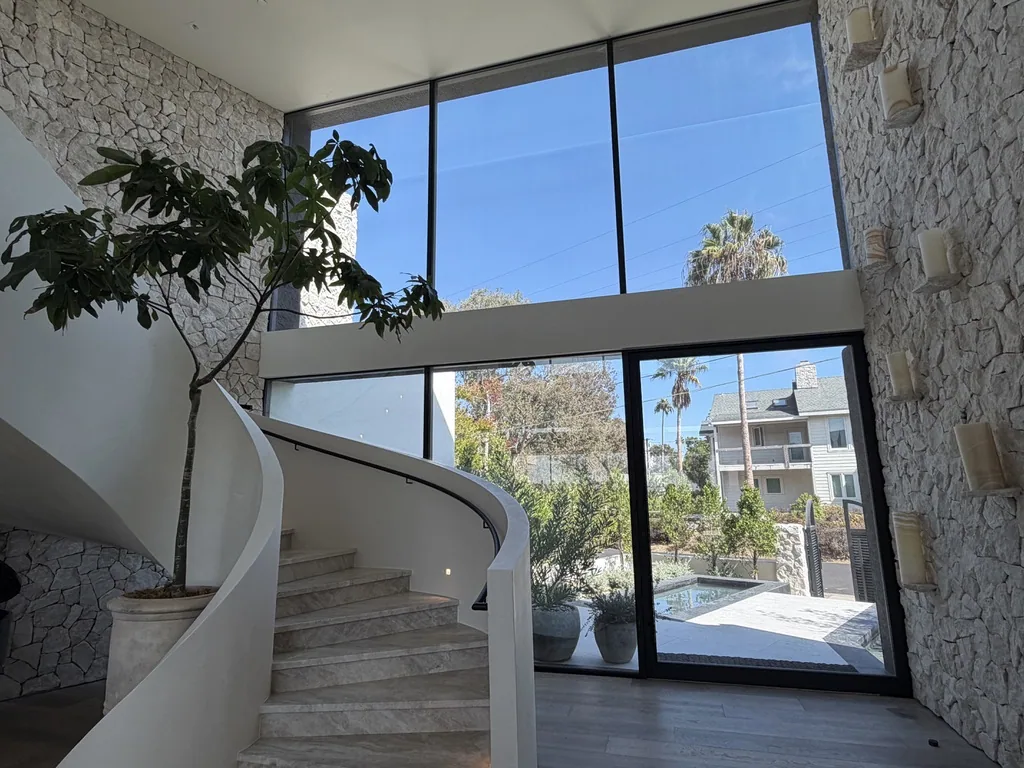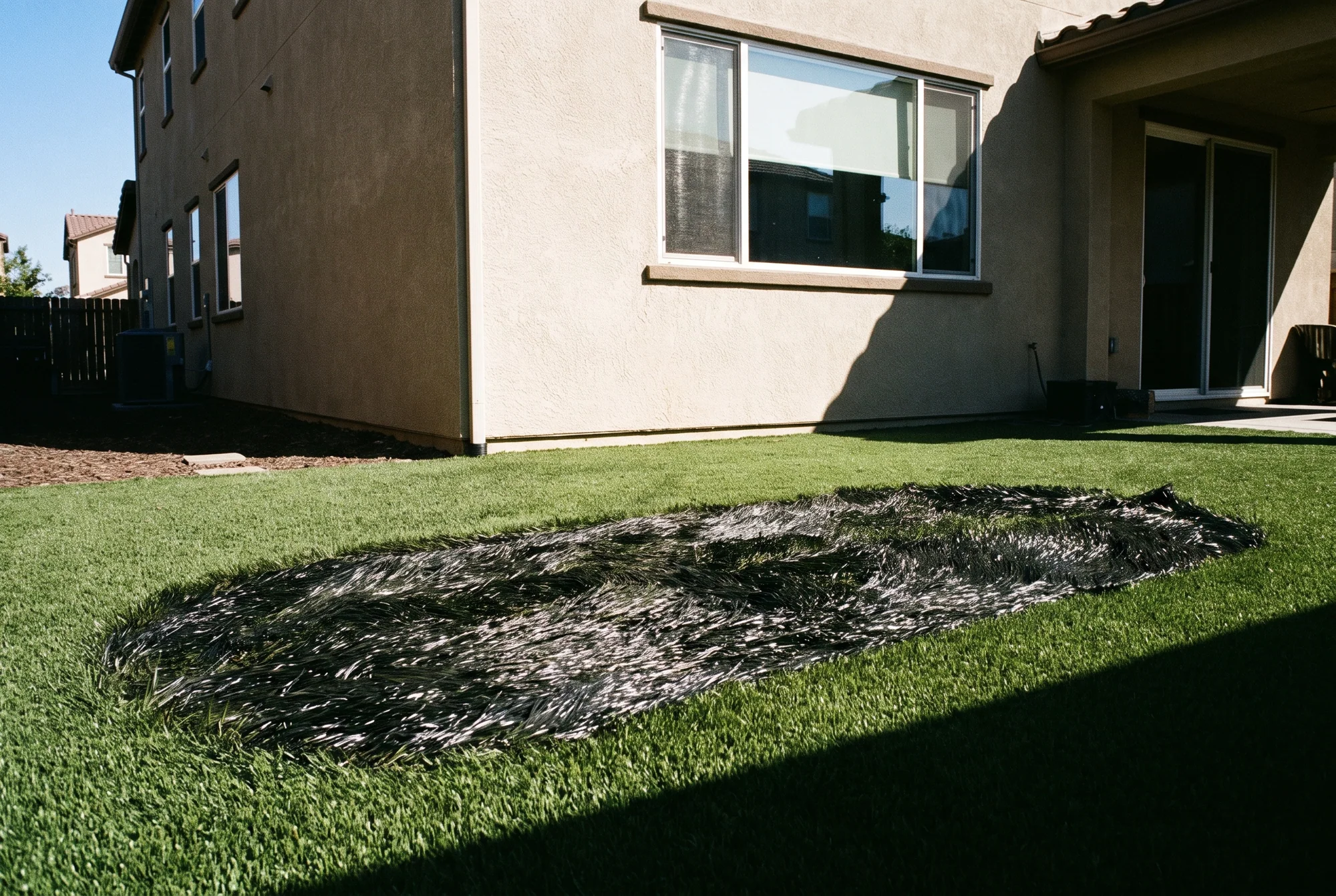
If you have a defined scorched patch on artificial turf, the cause is almost never the weather. It is a window.
Energy-efficient low-E glazing is reflective by design, and a double-glazed unit under pressure differential usually goes very slightly concave. That combination turns a flat reflection into a focused band, and temperatures inside that band can get hot enough that polyethylene turf fibres soften, go glossy and lie permanently flat.
The reason this catches people out is that interior window tint does nothing about it. The reflection is happening off the outside face of the glass, so a film behind that glass is never touched by it. Turf protection film is an exterior film on the outside of that glass that stops the reflection from concentrating in one place.
Second-story windows are the most common culprits, because the reflected angle lands squarely on the lawn rather than the fence. Stand on the burnt patch mid-afternoon and look up — whichever window is throwing a bright reflection at you is the one that needs the film.
Get a free quote for your windows.
A free on-site visit gets you measured openings, exact film specs and a fixed price. No obligation, and nobody will push you into a film you do not need.